Recycling in Austin: Your Guide to Going Green

The Surprising Advantages of Recycling Glass
Discover the different types of glass for recycling and learn how to properly sort and dispose of glass materials. Make your recycling efforts more effective and sustainable.

The advantages of recycling glass are both surprising and impactful, offering environmental, economic, and energy-saving benefits that contribute to a sustainable future.
Glass recycling is key to managing waste in the U.S. It helps us save the environment and use resources wisely. By embracing the advantages of recycling glass, we take a significant step toward reducing landfill waste and promoting resource efficiency.
Recycling glass is more than just throwing it away. It’s a big step towards less waste and a healthier planet. We can recycle clear, green, and brown glass from bottles and jars, ensuring that these materials are reused effectively. This not only minimizes waste but also supports industries that rely on recycled glass.
The recycling process starts with collecting and sorting glass. Then, it’s turned into new products, saving our natural resources and cutting down on landfill waste. By cleaning and sorting glass correctly, we help significantly in making the process more efficient. The advantages of recycling glass extend to its infinite recyclability—glass can be recycled endlessly without losing quality or purity, making it an ideal material for sustainable practices.
By understanding and leveraging the advantages of recycling glass, individuals and communities can make a meaningful impact on the environment, promoting a cleaner and greener future for all.
Key Takeaways
- Glass recycling helps conserve natural resources
- Multiple types of glass can be recycled effectively
- Proper sorting is crucial for successful recycling
- Recycling glass reduces environmental impact
- Individual actions make a significant difference
What is Glass Recycling?
Glass recycling is a smart way to deal with waste. It turns old glass into something new and useful. This process collects, sorts, and reuses different glass types to make new products and help the environment4.
The recycling starts with collecting and sorting. People help by separating glass from other trash. This makes sure the glass is clean and ready to be reused.
The Recycling Process
Glass recycling has several important steps:
- Collection from homes and businesses
- Sorting by color and type
- Cleaning and removing dirt
- Crushing into small pieces
- Melting and shaping into new glass products
Types of Recyclable Glass
Not all glass can be recycled the same way. Different types of recycled glass include:
- Clear glass bottles
- Green and brown wine bottles
- Jar containers
- Beverage containers
“Recycling one ton of glass saves over 1,300 pounds of sand, 410 pounds of soda ash, and 380 pounds of limestone.” – Glass Packaging Institute
The EPA backs recycling efforts with grants for new ideas4. For example, Klaw Industries is looking into using old glass in cement4.
Environmental Benefits of Glass Recycling
Glass recycling is key to saving our planet. It offers big environmental wins that go beyond just managing waste5.
- Significant reduction in landfill waste
- Lower carbon emissions
- Conservation of natural resources
Reducing Landfill Waste
Glass waste takes up a lot of space in landfills, causing long-term problems. By recycling glass, we cut down the waste going to these sites5. Recycling one ton of glass saves about one ton of natural resources from being used5.
Lowering Carbon Footprint
Recycling glass cuts down on greenhouse gas emissions. It needs less energy and uses fewer raw materials5.
| Recycling Benefit | Environmental Impact |
|---|---|
| Energy Savings | Up to 30% reduction in energy consumption |
| CO2 Emissions | Significant decrease in carbon footprint |
| Resource Conservation | Preserves natural mineral deposits |
“Recycling glass is not just a choice, it’s an environmental responsibility.”
Everyone can help make the future greener by recycling glass5.
Economic Advantages of Glass Recycling
Glass recycling is more than just good for the environment. It also boosts the economy by creating jobs and saving money. It offers big financial benefits for businesses and communities.
Job Creation in the Recycling Industry
The glass recycling field creates many jobs at different skill levels. Jobs range from collecting and sorting to processing and making new glass. This helps local communities by providing diverse employment opportunities6.
- Collection and transportation workers
- Sorting facility employees
- Glass processing technicians
- Quality control specialists
Cost Savings for Manufacturers
Using recycled glass can save manufacturers a lot of money. It takes less energy to melt recycled glass than raw materials. This cuts down production costs a lot7.
| Recycling Benefit | Economic Impact |
|---|---|
| Energy Consumption | Up to 30% reduction in manufacturing energy costs |
| Raw Material Savings | Decreased dependency on virgin materials |
| Production Efficiency | Streamlined manufacturing processes |
“Recycling glass isn’t just environmentally smart—it’s economically intelligent.” – Recycling Industry Expert
By choosing glass recycling, companies can lower their costs. They also help create a more sustainable economy.
Health Benefits Associated with Glass Recycling
Glass recycling is more than just saving the planet. It also protects our health and makes communities better. By using green glass recycling methods, we can cut down pollution and make our homes healthier.
Decreasing Pollution Levels
Recycling glass properly cuts down on bad environmental pollutants. When we recycle glass, we stop harmful chemicals from getting into our soil and water. Different types of glass can greatly lessen air and water pollution.
- Reduces greenhouse gas emissions
- Minimizes soil contamination
- Prevents groundwater pollution
“Recycling glass is not just an environmental choice, but a health protection strategy.” – Environmental Health Experts
Enhancing Community Wellbeing
Glass recycling programs get people involved and teach them about caring for the environment. When folks join recycling efforts, they feel a shared duty to health and the planet.
| Recycling Impact | Community Benefits |
|---|---|
| Reduced Waste | Cleaner Public Spaces |
| Lower Pollution | Improved Air Quality |
| Resource Conservation | Sustainable Living |
By embracing glass recycling, communities invest in their long-term health and environmental sustainability.478
Energy Efficiency in Glass Production
Recycling glass is a big win for saving energy in making things. Different kinds of recycled glass can cut down energy use a lot. This is compared to making new glass from scratch.
Using recycled glass is good for the planet and saves money too. By knowing about glass recycling, makers can make their processes better.
Lower Energy Consumption Strategies
Recycled glass needs much less energy to work with than raw materials. The big pluses are:
- It melts at lower temperatures
- It costs less to get the raw materials
- It makes less carbon emissions
Comparing Recycled vs. New Glass Production
Recycled glass production is very energy-efficient. Using recycled glass can save about 30% of energy. This saves a lot of money and helps the environment a lot.
“Recycling glass is not just an environmental choice, but a smart economic strategy for modern manufacturers.”
Glass recycling keeps getting better, offering new ways to make things sustainably. By using these new methods, companies can cut down on carbon emissions. They can still make high-quality products9.
Supporting the Circular Economy
Glass recycling is key to a sustainable future. It’s at the heart of the circular economy. This model changes how we use and reuse materials.
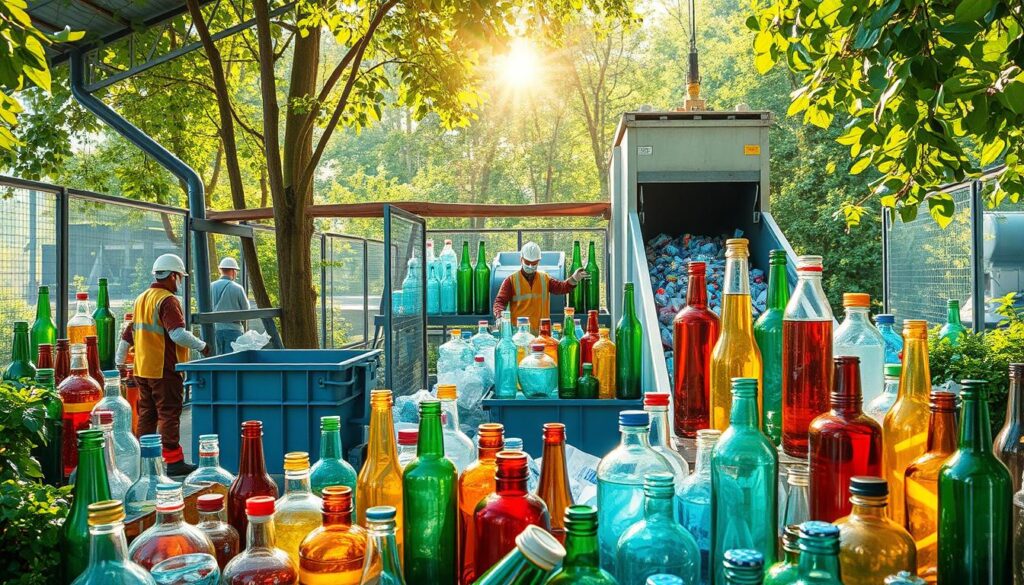
The circular economy is more than recycling. It’s a system where materials are constantly reused. This reduces waste and boosts resource use.
Interconnected Industrial Ecosystems
Glass recycling links many industries through green practices. These include:
- Construction materials manufacturing
- Packaging industries
- Decorative and artistic glass production
- Automotive glass replacement
Sustainable Practice Advantages
Adopting circular economy principles helps industries. Recycling glass cuts down on raw material use. It also opens up new economic chances and lessens environmental harm.
“Sustainability is not about doing less harm, but about creating positive regenerative systems.” – Dr. Katherine Richardson, Sustainability Expert
Switching to a circular economy needs teamwork. It shows that eco-friendly glass disposal is a big deal. It’s not just a process, but a way to manage resources10.
Innovations in Glass Recycling Technology
The world of glass recycling is changing fast with new tech. These changes are making recycling better and more sustainable. They open up new ways to handle waste.
The U.S. Environmental Protection Agency is backing these new recycling techs. They gave out $2.4 million in grants to 24 companies4. This shows they’re serious about making recycling better.
Advanced Sorting Techniques
Now, glass recycling uses smart sorting tech. This tech makes recycling faster and better. The main improvements are:
- Optical sorting systems with high-resolution cameras
- Artificial intelligence for color and material ID
- Automated separation tools
- Laser tech for detection
New Uses for Recycled Glass
Recycled glass is being used in new ways. It’s being used in:
- Building materials
- Art pieces
- Aggregates for roads
- Design elements in landscapes
| Industry | Recycled Glass Application | Sustainability Impact |
|---|---|---|
| Construction | Aggregate replacement | Reduces virgin material use |
| Manufacturing | Glass fiber production | Uses less energy |
| Art | Decorative elements | Encourages creative reuse |
“The future of glass recycling lies in technological innovation and creative reimagining of waste materials.”
New tech is key for better glass recycling. It makes recycling good for the planet and saves money. We can expect even more progress in the future.
Challenges in Glass Recycling
Glass recycling is vital for our planet, but it faces big hurdles. Knowing these problems helps us find new ways to recycle glass better.
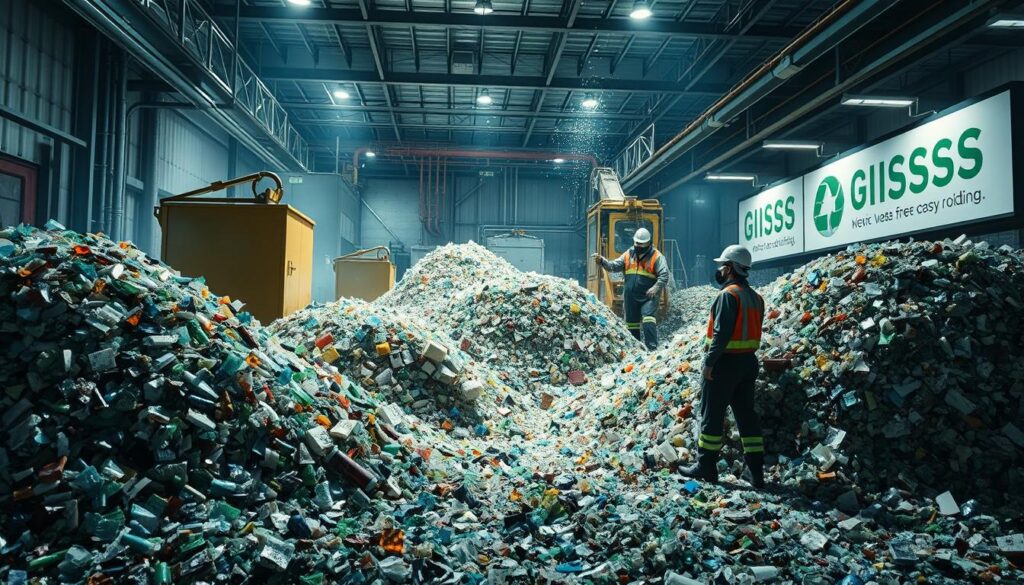
Contamination: A Major Recycling Roadblock
Contamination is a big issue in glass recycling. Things like ceramic, metal lids, and food can ruin the recycling process. These problems make recycling glass harder and more costly.
- Ceramic fragments can damage recycling equipment
- Food residue increases processing complexity
- Metal attachments require additional sorting
Infrastructure Limitations
The glass recycling world has big infrastructure problems. Many places don’t have the right facilities to recycle glass well.
“Effective glass recycling requires robust infrastructure and community commitment.” – Environmental Sustainability Expert
Some major infrastructure issues are:
- Limited collection systems
- Insufficient processing facilities
- High transportation costs
To solve these problems, we need to invest in new sorting tech and teach people how to recycle glass right. Creating strong recycling programs can help fix these issues11.
How to Recycle Glass Properly
Glass recycling is key to protecting our planet and saving resources. Knowing which glass to recycle and where can greatly help manage waste.
Before recycling, it’s important to know the basics. Not all glass can be recycled, so sorting is essential.
Best Practices for Consumers
- Clean glass containers before recycling
- Remove labels and metal lids
- Separate different types of glass for recycling
- Avoid breaking glass before disposal
- Check local recycling guidelines for specific requirements
Understanding Local Recycling Guidelines
Every area has its own recycling rules. It’s important to reach out to local waste management to learn what’s needed12. Some places offer curbside pickup, while others need you to drop off at recycling centers.
“Proper glass recycling starts with knowing your local guidelines”
What to Do with Non-Recyclable Glass
Some glass items can’t be recycled the usual way. Window panes, mirrors, and ceramics need special care. Look for creative ways to reuse them or find specialized recycling centers.
By following these tips, you help the environment and support the glass recycling cycle13.
The Future of Glass Recycling
Glass recycling is set for big changes soon. New ways to recycle glass are being developed. This includes using different types of recycled glass for new products. Experts say we’ll see a big move towards better waste management11.
New technologies will make recycling glass easier. Better sorting and recycling tools will help turn old glass into new resources. The construction and packaging fields are starting to use recycled glass more, showing a positive trend11.
Trends and Predictions
Changes in laws will help glass recycling grow. Governments will offer more reasons for businesses and people to recycle. Cities in the U.S. are building better recycling systems, showing a big push to reduce waste and protect the environment11.
The Role of Policy Changes
The outlook for glass recycling is bright. As we learn more and technology gets better, recycling will become more efficient and green. Everyone will work together to make recycling better for our planet11.
FAQ
What types of glass can be recycled?
You can recycle many types of glass. This includes bottles, jars, wine bottles, and food containers. Clear, green, and brown glass from drinks and food packaging can usually be recycled. But, not all glass like window panes, mirrors, ceramics, and pyrex dishes can be recycled.
How clean do glass items need to be before recycling?
Glass items need to be clean and free from food. Try to remove labels, but don’t worry about small pieces of paper. Make sure the glass is clean to avoid contamination during recycling.
What happens to glass during the recycling process?
Glass recycling involves several steps. First, it’s collected and sorted. Then, it’s cleaned and crushed into small pieces called cullet. Finally, it’s melted and turned into new glass products. This saves energy and uses less raw materials than making new glass.
Why is glass recycling important for the environment?
Recycling glass helps the environment a lot. It reduces landfill waste, saves natural resources, and cuts down on carbon emissions. Recycling one ton of glass saves about 1.2 tons of raw materials and cuts carbon dioxide emissions by nearly 315 kg.
Can broken glass be recycled?
Broken glass can be recycled, but it depends on your local recycling center. Many places don’t accept broken glass because it’s dangerous for workers. Always check with your local recycling center for their rules.
How much energy does glass recycling save?
Recycling glass saves a lot of energy. It uses about 30% less energy than making new glass from raw materials. Using 10% recycled glass in manufacturing can reduce energy use by 3-4%.
What are the economic benefits of glass recycling?
Glass recycling creates jobs and lowers manufacturing costs. It’s more cost-effective than making new glass because it uses less energy and raw materials. This supports a circular economy.
Are colored glass bottles recyclable?
Yes, green, brown, and clear glass bottles can be recycled. They are sorted and processed separately to keep the quality and color of recycled glass products. Most recycling facilities can handle different colors of glass.
How can individuals improve their glass recycling habits?
To recycle more glass, clean it well, remove caps and lids, and separate colors. Always check local recycling guidelines. Joining community recycling programs and teaching others about recycling can also help a lot.
What challenges exist in glass recycling?
Glass recycling faces many challenges. These include contamination, limited recycling infrastructure, transportation costs, and specialized sorting technologies. But, new technologies and education are helping to solve these problems.
Related posts:
How to Encourage Glass Recycling in Your Community: A Comprehensive Guide
Introduction
Glass is a highly recyclable material, capable of being endlessly transformed without l...
What Happens to Glass After You Recycle It: From Bin to Bottle
Introduction
Recycling is a cornerstone of sustainable living, and glass is one of the most recyclab...
A Clear Vision: The History of Glass Recycling Around the World
Introduction
Glass, a material as old as civilization itself, has a rich history of being reused and...