Recycling in Austin: Your Guide to Going Green

Eco-Friendly Plastic Recycling Companies to Know
Discover leading plastic recycling companies that transform waste into valuable resources. Learn how these firms drive sustainability through innovative recycling solutions

The world faces a big problem with plastic waste. Eco-friendly plastic recycling companies are finding new ways to deal with it. They are working hard to make plastic waste sustainable1.
Only about 20% of the world’s waste is recycled1. This shows how urgent it is to find better ways to recycle. These companies are leading the way with new ideas and technologies.
Plastic recycling companies are key to saving our planet. The world uses 75% more natural resources than it can replace1. These companies are creating new technologies to cut down waste and emissions.
Companies like PureCycle Technologies are changing the game. They turn old plastics into new, valuable materials. Their work shows how recycling can be both eco-friendly and effective2.
Key Takeaways
- Plastic recycling is crucial for environmental sustainability
- Less than 20% of global waste is currently recycled
- Innovative technologies are transforming plastic waste management
- Companies are developing sustainable recycling solutions
- Reducing natural resource consumption is a critical global challenge
Introduction to Plastic Recycling
Plastic recycling services are key to solving the global plastic waste problem. Our planet is facing huge waste challenges. We need new solutions and to work together.
Plastic waste is a big environmental issue. Every year, 380 million tons of plastic are made. But only a tiny bit is recycled3. This shows we really need better ways to recycle plastic.
Importance of Plastic Recycling
Good plastic waste management has many benefits:
- It cuts down landfill waste
- It saves natural resources
- It lowers greenhouse gas emissions
- It creates jobs in recycling
Environmental Impact of Plastic Waste
“Recycling one ton of plastic saves about 7.4 cubic yards of landfill space” – Environmental Protection Agency
The harm from plastic waste is huge. It harms oceans, animals, and people. Microplastics pollute water, food, and are bad for the environment long-term4.
| Plastic Type | Recycling Rate | Common Uses |
|---|---|---|
| PET | 20-30% | Beverage bottles |
| HDPE | 10-15% | Milk jugs, containers |
| LDPE | 5-10% | Plastic bags, wraps |
Plastic recycling is crucial. It turns waste into useful things. It helps create a better economy for our planet and people.
Overview of the Plastic Recycling Industry
The plastic recycling industry is changing fast because of global environmental worries. Plastic recyclers are key in solving the plastic waste problem and using resources wisely5.
- More money going into recycling tech
- People becoming more aware of the environment
- Companies committing to the circular economy
Growth Trends in Plastic Recycling
The plastic recycling field is growing a lot. Market studies show it has a lot of room to grow. New tech and green practices are leading the way6. Companies are now using better recycling methods to get more materials and lessen harm to the environment.
Key Players in the Market
Some big names are making a big difference in plastic recycling. These recyclers are using the latest solutions to tackle waste problems:
| Company | Specialization | Key Innovation |
|---|---|---|
| GreenTech Recycling | Plastic Processing | Advanced Sorting Technologies |
| EcoPlastic Solutions | Chemical Recycling | Molecular Breakdown Techniques |
| Circular Plastics Inc. | Sustainable Manufacturing | Closed-Loop Recycling Systems |
“Innovation drives the future of plastic recycling, transforming waste into valuable resources.”
The plastic recycling industry is showing great strength and potential for growth. With smart investments and new tech, it’s opening up new chances for the environment and economy5.
Top Plastic Recycling Companies in the U.S.
The United States has many leading plastic recycling companies. They are key in managing plastic waste and helping the environment. These companies use new ways to handle waste1.
Worldwide, recycling is a big challenge. Only about 20% of waste is recycled1. This shows how important it is to have companies focused on recycling.
Waste Management, Inc.
Waste Management, Inc. is a leader in recycling. They have plans to tackle plastic waste. They use new sorting and recycling methods1.
- Advanced waste collection systems
- Cutting-edge recycling technologies
- Commitment to environmental sustainability
Republic Services
Republic Services is also a key player. They go beyond usual recycling methods. They invest in new tech and infrastructure to make recycling better1.
Covanta Holding Corporation
Covanta Holding Corporation has a special way of handling waste. They turn waste into energy, solving environmental problems with new ideas1.
| Company | Key Focus | Environmental Impact |
|---|---|---|
| Waste Management, Inc. | Advanced Recycling Technologies | Reducing Plastic Waste |
| Republic Services | Sustainable Waste Management | Recycling Infrastructure |
| Covanta Holding Corporation | Waste-to-Energy Conversion | Renewable Energy Production |
The future of plastic recycling depends on innovative companies committed to sustainable solutions1.
These top companies show that managing waste well needs new ideas, tech, and caring for the environment1.
Innovative Technologies in Plastic Recycling
The plastic recycling industry is seeing big changes with new technologies. These solutions aim to make recycling better for the planet. They promise to change how we deal with plastic waste.
New plastic recycling technologies are getting a lot of attention. There are two main types:
Mechanical Recycling Techniques
Mechanical recycling is a key method for recycling plastics. It involves:
- Sorting plastics by type and color
- Cleaning and removing contaminants
- Shredding materials into small pieces
- Melting and reforming into new products
Big companies are investing in this area. Over the last two years, there have been about 50 funding rounds for recycling tech7. This shows a strong commitment to better recycling solutions.
Chemical Recycling Advancements
Chemical recycling is a more advanced way to recycle plastics. It breaks down plastics into their molecular components. This allows for:
- Purification of plastic materials
- Creation of virgin-quality recycled plastics
- Processing of traditionally non-recyclable plastics
Some companies are leading the way. For example, DePoly got $15.3 million in funding, including a $13.8 million seed round from BASF in mid-20237. This shows the potential of new recycling tech.
“The future of plastic recycling lies in our ability to develop innovative technologies that can transform waste into valuable resources.” – Recycling Industry Expert
These new technologies are very important. Over 90% of plastics worldwide are not recycled7. By investing in these solutions, we can greatly reduce waste and make the future more sustainable.
Best Practices for Plastic Recycling
Plastic recycling companies are key in managing waste and protecting our planet. They need to focus on details and use smart strategies to boost recycling. This helps a lot in keeping our environment clean.
Sorting recyclables right is the first step to good plastic recycling. People and recycling centers must know about different plastics. This knowledge helps in getting the most out of recycling.
Understanding Plastic Types
Each plastic type needs its own recycling method. Here’s a guide to help identify and sort plastics:
- PET (Polyethylene Terephthalate): Common in drink bottles, easy to recycle
- HDPE (High-Density Polyethylene): In milk jugs and detergent containers
- PVC (Polyvinyl Chloride): Hard to recycle, needs special services
- LDPE (Low-Density Polyethylene): In plastic bags and bottles that you can squeeze
Sorting Techniques for Optimal Recycling
Here are some sorting tips from plastic recycling companies:
- Clean all recyclables well
- Take off labels and caps
- Check what your local recycling accepts
- Sort plastics by type
“Proper sorting is the first step towards effective recycling” – Recycling Industry Expert
| Plastic Type | Recyclability | Common Uses |
|---|---|---|
| PET | High | Beverage bottles, food containers |
| HDPE | Medium to High | Milk jugs, shampoo bottles |
| PVC | Low | Pipes, window frames |
Most plastics, over 90%, are not recycled. They end up in landfills, oceans, or even in our food7. By following these best practices, we can all help recycle more and make our planet greener.
Challenges Facing Plastic Recycling Companies
The plastic recycling industry faces big challenges that make it hard to keep going. Companies must find ways to manage plastic waste well.
Contamination: A Critical Barrier
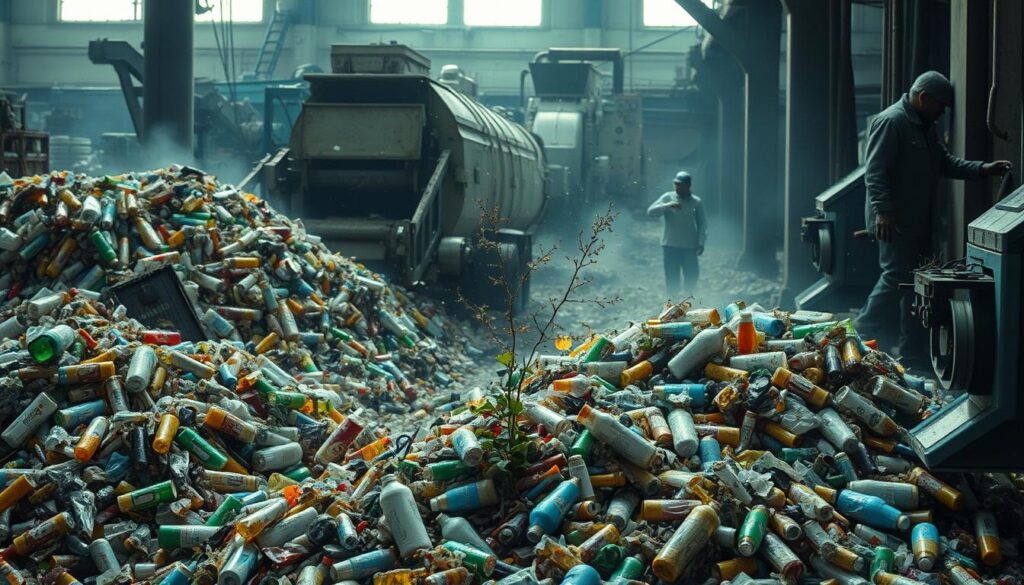
Contamination is a big problem for plastic recyclers. Impurities in recyclable materials make recycled plastics less valuable. Common sources of contamination include:
- Food residue
- Mixed material packaging
- Non-recyclable plastic types
- Incorrect sorting practices
Economic Hurdles in Recycling
The cost of recycling plastic is a big issue.
“Recycling must be financially sustainable to create meaningful environmental impact,”
experts say. Major economic challenges include:
- Fluctuating raw material prices
- Limited market demand for recycled plastics
- High processing costs
- Competitive virgin plastic pricing
New solutions are coming to tackle these problems. Some recyclers are using advanced sorting tech and chemical recycling to make things better8.
Despite the hurdles, the push for green plastic waste management keeps the recycling industry moving forward5.
Government Regulations and Support
The plastic recycling industry is shaped by complex rules. Federal and state policies are key in promoting eco-friendly recycling in the U.S.
Federal Policy Initiatives
The U.S. government has launched several important policies to help the plastic recycling industry. These efforts aim to manage plastic waste effectively:
- The RECYCLE Act, designed to improve recycling infrastructure
- Save Our Seas 2.0 Act, targeting marine plastic pollution
- Investments in research and development for innovative recycling technologies
State-Level Recycling Initiatives
States are leading the way in eco-friendly plastic recycling. Extended producer responsibility laws are becoming more common. They require manufacturers to handle the whole life cycle of their plastic products.
“Effective recycling requires collaborative efforts between government, industry, and consumers.” – Environmental Policy Experts
Many states have set high recycling goals and support programs for the plastic recycling industry. These efforts include:
- Financial incentives for recycling companies
- Mandatory recycling programs
- Investment in recycling infrastructure
The rules keep changing, opening doors for new ideas and growth in sustainable plastic management9. Policymakers see eco-friendly plastic recycling as a vital way to protect the environment10.
The Role of Consumers in Recycling
Consumers are key in making plastic recycling work. What we do can really help the environment. By recycling right, we can cut down on plastic waste and help the planet.
- Properly sort different types of plastic waste
- Clean recyclable materials before disposal
- Educate family and friends about recycling
- Support local recycling programs
- Reduce overall plastic consumption
Individual Recycling Contributions
Knowing what plastics can be recycled is important. Consumers should learn to identify recyclable plastics by checking the recycling symbols on containers. Not all plastics can be recycled everywhere, so it’s important to follow local rules.
“Small changes in personal habits can create significant environmental impact.” – Environmental Sustainability Expert
Community Awareness Programs
Community programs are vital for teaching us about recycling. They help us learn how to recycle correctly, host events for collecting recyclables, and give tips on using less plastic.
Americans throw away a lot of plastic every year11. For example, we use about 50 billion single-use water bottles each year11. By joining these programs and making smart choices, we can make a big difference511.
The Future of Plastic Recycling
The plastic recycling industry is on the verge of big changes. New technologies and green strategies are changing how companies handle plastic waste. These changes are making recycling more efficient and better for the planet.

New tech is making big waves in plastic recycling. Some key advancements include:
- Artificial Intelligence in sorting
- Advanced chemical recycling
- Biodegradable plastic options
- Machine learning for better waste sorting
Emerging Trends in the Industry
Companies are now using the latest solutions to tackle environmental issues. Smart recycling technologies are changing how we manage plastic waste5. The industry is growing fast, with more money going into green and efficient recycling methods.
| Technology | Potential Impact |
|---|---|
| AI Sorting Systems | 90% better at identifying plastics |
| Chemical Recycling | Can recycle plastics that couldn’t be before |
| Ocean Plastic Recovery | Could remove millions of tons of ocean plastic |
Sustainability Goals and Targets
Top plastic recycling companies are setting big goals for sustainability. They aim to:
- Lower virgin plastic use
- Boost recycling rates
- Create closed-loop recycling systems
- Lessen environmental harm
“The future of plastic recycling is all about innovation and green practices.”
As the industry grows, working together will be key. Tech creators, environmentalists, and recycling firms must join forces to tackle global plastic waste6.
Case Studies of Successful Plastic Recycling Initiatives
The world of plastic recycling is changing fast. Top companies are leading the way with new ideas. Closed Loop Partners and TerraCycle are two leaders in making things better.
Closed Loop Partners: Circular Economy Investment
Closed Loop Partners is a leader in plastic recycling. They focus on making things better by using waste. The firm brings together investors, companies, and municipalities to develop innovative recycling technologies.
- Invests in sustainable infrastructure
- Develops circular economy strategies
- Supports cutting-edge recycling technologies
TerraCycle’s Groundbreaking Innovations
TerraCycle is another big name in plastic recycling.
“We believe that innovation is the key to solving complex waste challenges,”
their leaders say. They tackle hard-to-recycle materials that others can’t handle12.
Danone is working hard to reduce plastic use. They cut plastic use by 9% from FY 2022 to FY 202312. They aim to use only reusable, recyclable, or compostable packaging by 203012.
These stories show how important new ideas are in solving plastic waste problems. Top companies are making a big difference in keeping our planet clean.
Collaborations in the Recycling Sector
The plastic recycling industry is going through big changes. Companies are working together with environmental groups, big businesses, and government agencies. They aim to tackle the tough issues of plastic waste.
New partnerships are changing how plastic recycling works. Firms are coming up with plans to better recycling systems. They want to find lasting solutions for our planet.
Partnerships Between Companies and NGOs
Companies and non-profit groups are teaming up in exciting ways. For example, Coca-Cola India worked with others to make 21,500 jackets from recycled plastic. These jackets helped important workers in waste and sanitation13.
They gave out jackets to:
- Sanitation workers (10,000 jackets)
- Boatmen across 4,000 boats (10,000 life jackets)
- Waste management volunteers (1,500 jackets)
Corporate Responsibility Initiatives
Companies are taking big steps to help the environment. They’re using new tech and building better systems for recycling. Some key actions include:
- Setting up Reverse Vending Machines in important places
- Creating spots for recycling
- Building systems for processing plastic waste
“Collaboration is the key to transforming our approach to plastic recycling and creating a sustainable future.”
These partnerships show how plastic recycling can lead to real change. They prove that working together can make a big difference for our planet.
Conclusion
The journey of plastic waste management shows us a key path to a sustainable future. Eco-friendly plastic recycling is more than a technical fix. It’s a crucial way to tackle the global waste problem. Businesses and consumers must work together to change how we deal with plastic waste8.
The Power of Individual and Collective Action
Since 40% of plastic is not recycled8, we have a big chance to make a difference. We can all help by supporting companies that care about recycling. Choosing products from brands that recycle and disposing of waste properly are also important steps.
Building a Sustainable Future
The recycling industry is growing, offering new chances for success. The market for recycled materials is expected to grow a lot14. By backing eco-friendly recycling, we can build a circular economy. This will help the environment and create jobs.
Call to Action
We can all help with plastic waste management. By learning, supporting good companies, and making smart choices, we can make a big difference. Together, we can change how we recycle and take care of our planet.
FAQ
What is plastic recycling and why is it important?
Plastic recycling turns old plastic into new stuff. It helps clean our environment, saves resources, and cuts down plastic waste harm. Recycling plastics means less trash in landfills and less need for new plastic.
How can I identify which plastics are recyclable?
Look for a recycling symbol (a triangle with numbers 1-7) on the bottom of plastic containers. Plastics #1 (PET) and #2 (HDPE) are usually recyclable. But, check with your local recycling center for what they accept.
What challenges do plastic recycling companies face?
Recycling companies struggle with dirty plastics, changing market prices, sorting plastics, and making recycling profitable. New tech and better sorting help tackle these issues.
How can consumers improve their plastic recycling efforts?
To recycle better, clean and dry plastics well. Sort them right. Don’t mix them with non-recyclables. Join local recycling programs and use less plastic.
What are the main types of plastic recycling technologies?
There are two main recycling methods:– Mechanical Recycling breaks plastics down and reforms them.– Chemical Recycling turns plastics into their basic chemicals to make new plastics or products.
Are there government regulations supporting plastic recycling?
Yes, laws at all levels help recycling. The Save Our Seas 2.0 Act and the RECYCLE Act aim to improve recycling, cut waste, and promote green waste management.
What innovations are emerging in the plastic recycling industry?
New ideas include AI for sorting, better polymer breakdown, closed-loop recycling, and biodegradable plastics. There’s also work to clean up the oceans.
How do plastic recycling companies contribute to the circular economy?
Recycling companies turn old plastics into new products. This reduces the need for new plastic, cuts waste, and adds value to materials that would be thrown away.
What are the environmental impacts of not recycling plastics?
Not recycling plastics pollutes land and sea, harms animals, and increases greenhouse gases. It also wastes resources and harms the environment long-term.
How can businesses support plastic recycling efforts?
Companies can help by using green packaging, making products from recycled materials, and working with recycling firms. They can also support recycling laws and invest in recycling tech.
Related posts:
Austin Plastic Bag Drop Off: Keep Film Out of the Cart
Why Austin plastic bags cannot go in the blue cart, and where to drop off clean, dry film instead.
Recycling Nuclear Waste: Turning Risk into Resource
Introduction
The specter of nuclear waste looms large in the conversation about nuclear energy. But ...
How to Recycle at Home: A Comprehensive Guide
Introduction
Recycling at home is a crucial step towards environmental sustainability. By properly s...