Recycling in Austin: Your Guide to Going Green

The Surprising Advantages of Recycling Glass
Discover the environmental and economic benefits of glass recycling. Learn how this sustainable practice reduces landfill waste and conserves natural resources for a greener future

Glass recycling is key in today’s waste management. It brings big environmental and economic wins. It turns old glass into something new and valuable1.
Learning about glass recycling shows us how to save resources. It turns waste into something useful. This way, communities can cut down on landfill waste and protect the environment2.
Glass is special because it can be recycled over and over again. It doesn’t lose its quality or strength, making it perfect for the circular economy1.
Key Takeaways
- Glass can be recycled indefinitely without quality degradation
- Recycling reduces landfill waste significantly
- Energy savings are substantial in glass recycling processes
- Recycling creates economic opportunities in waste management
- Environmental conservation is a direct result of glass recycling
What Is Glass Recycling and Why Is It Important?
Glass recycling is a key way to protect our environment. It turns old glass into new products. This helps cut down on waste and saves natural resources.
Learning about the glass recycling process means looking at several important steps. These steps turn used glass into materials we can use again.
Understanding Glass Recycling
Glass recycling is a detailed process. It starts with collecting, sorting, and reusing glass. This method makes new glass products while saving resources and reducing waste.
Steps in the Glass Recycling Process
- Collection of used glass from residential and commercial sources
- Sorting glass by color and removing contaminants
- Cleaning and processing recyclable glass
- Crushing glass into cullet (small glass fragments)
- Melting cullet in manufacturing furnaces
- Reshaping molten glass into new products
“Recycling glass is not just about waste management, it’s about creating a sustainable future.” – Environmental Sustainability Expert
Effective glass recycling reduces energy consumption and preserves raw materials. The process lets materials be reused many times without losing quality. It’s a3 green way to recycle.
By getting involved in glass recycling, we all help the environment. This effort is crucial for saving our planet.
Environmental Benefits of Glass Recycling
Sustainable glass recycling is key to protecting our planet. It goes beyond just managing waste. It offers big environmental wins that help save natural resources and lessen our impact on the earth.
The effects of glass recycling are wide-ranging and beneficial. Communities in the United States are finding new ways to turn waste into useful items through sustainable glass recycling.
Reduction of Landfill Waste
Glass recycling cuts down on landfill waste. In North East Lincolnshire, for instance, people recycled 20,939 tonnes of materials in a year. This shows how much waste we can cut down4.
By keeping glass out of landfills, we:
- Lessen environmental pollution
- Save land
- Lower greenhouse gas emissions
Conservation of Natural Resources
Sustainable glass recycling helps save natural resources. Every ton of recycled glass saves important raw materials. It means we don’t have to dig up new materials from the earth.
“Recycling glass is not just about waste management—it’s about resource conservation and environmental stewardship.”
The Small Business Innovation Research program backs new glass recycling tech. Recently, 24 companies got grants to work on recycling solutions5.
| Recycling Benefit | Environmental Impact |
|---|---|
| Landfill Waste Reduction | Preserves land and reduces pollution |
| Resource Conservation | Minimizes raw material extraction |
By choosing glass recycling, we can make our planet more sustainable. We can do it, one bottle at a time.
Economic Advantages of Glass Recycling
Glass recycling brings big economic wins, beyond just helping the planet. It has turned into a key driver of jobs and value in many areas.
Glass recycling companies boost local economies. They create jobs at all levels, from picking up and sorting to making new glass.
Job Creation in Recycling Industries
The glass recycling field is a big job creator. Here are some jobs it offers:
- Collection and transportation specialists
- Sorting and processing technicians
- Quality control professionals
- Equipment maintenance workers
- Research and development engineers
Cost Savings for Manufacturers
Glass recycling helps makers save money. Recycled glass needs less energy and raw materials, which saves a lot of money.
“Recycling glass is not just environmentally responsible—it’s economically smart.” – Recycling Industry Expert
| Cost Comparison | Virgin Glass Production | Recycled Glass Production |
|---|---|---|
| Energy Consumption | High | Reduced by 30% |
| Raw Material Costs | Expensive | Significantly Lower |
| Carbon Footprint | Substantial | Minimal |
By investing in glass recycling, makers can cut costs a lot6. The world is moving towards using more recycled materials in making things.
The future of glass recycling looks bright, offering chances for new ideas and green growth in making things7.
Energy Savings Through Glass Recycling
Glass recycling is a key way to make manufacturing more sustainable. It cuts down energy use and environmental harm. Turning old glass into new products is very efficient with today’s technology.
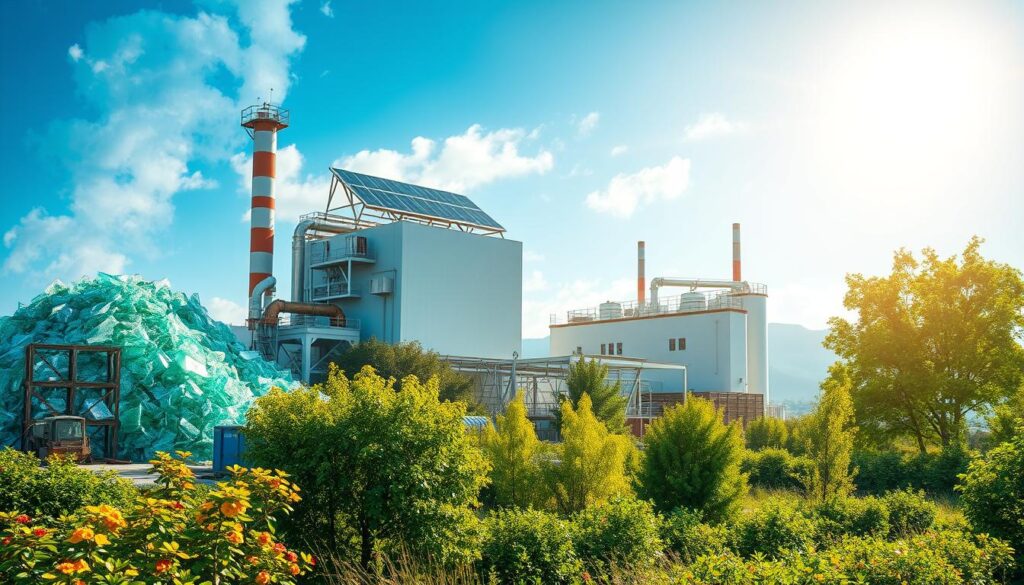
Reducing Manufacturing Energy Consumption
Modern glass recycling tech saves a lot of energy compared to old ways. The main benefits are:
- Lower melting temperatures for recycled glass
- Less need to extract raw materials
- Less energy used in making products
Comparative Analysis of Energy Usage
Looking at making glass from scratch versus recycling, the savings are clear. Recycling glass needs about 30% less energy than making it from raw materials.
| Production Method | Energy Consumption | Carbon Emissions |
|---|---|---|
| Virgin Glass Production | High | Significant |
| Recycled Glass Manufacturing | Low | Reduced |
“Recycling glass is not just about waste reduction, it’s about intelligent energy management.” – Environmental Sustainability Expert
Glass recycling tech is getting better, aiming for even more energy savings7. By using sustainable recycling, companies can lower their carbon footprint. This helps the planet and supports global conservation8.
How Glass Recycling Supports Sustainability
Sustainable glass recycling is key for the environment and managing resources. Glass is special because it can be recycled over and over again. This helps a lot in making our planet greener.
Recycling glass does more than just cut down on waste. It’s because glass can be recycled endlessly without losing its strength. This makes it stand out from other materials.
The Unique Recyclability of Glass
Glass recycling has big environmental wins. It works in a special recycling loop. This loop has many benefits:
- 100% recyclable without losing quality
- Less energy needed to make new glass
- Less waste is made
- Natural resources are saved5
Closed-Loop Recycling System
A closed-loop system for glass recycling means materials keep getting reused. This system cuts down on waste and makes production more sustainable5. Projects show how glass waste can even be used in making cement5.
“Sustainable glass recycling turns waste into something valuable, helping create a circular economy.”
Thanks to new strategies and tech, glass recycling keeps helping the environment. It cuts down on harm to nature and makes using resources more efficient.
The Impact of Glass Recycling on Climate Change
Glass recycling is key in fighting global climate issues. It’s a strong way to cut down on greenhouse gases and lessen harm to the environment.
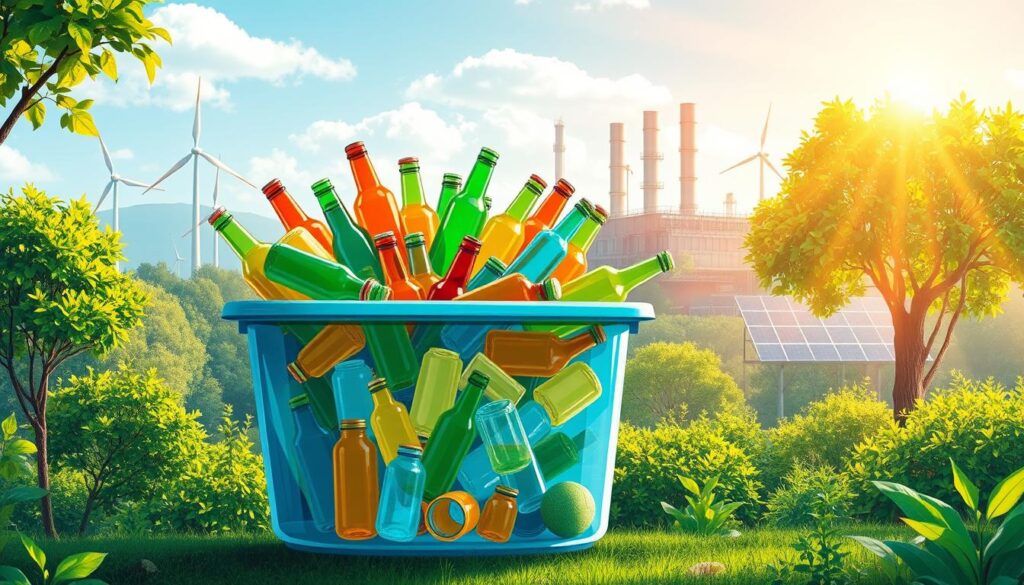
Recycling glass does more than just manage waste. It turns old glass into new products, lowering carbon footprints in many sectors.
Reducing Greenhouse Gas Emissions
Making glass uses a lot of energy, leading to big carbon emissions. Recycling glass helps a lot:
- It cuts down on raw material use
- It uses less energy in making new glass
- It reduces landfill waste
“Every ton of glass recycled saves about 315 kilograms of carbon dioxide emissions” – Environmental Protection Agency
Mitigating Global Warming Impacts
Recycling glass helps fight climate change. Every recycled glass container is a small but important step to lower global greenhouse gases.
Recycling glass needs much less energy than making it from scratch. This means big carbon savings for people all over the world9.
| Recycling Method | CO2 Reduction |
|---|---|
| Virgin Glass Production | 100% Emissions |
| Recycled Glass Production | 30-50% Emissions |
Supporting local glass recycling helps fight global climate change10.
Community Benefits of Glass Recycling Programs
Glass recycling programs are key to making local communities better. They raise awareness about the environment and promote sustainable living. These efforts protect our planet and offer chances for people to get involved.
Setting up glass recycling facilities in local areas encourages people to join in. It turns recycling into a team effort that brings neighbors closer together.
Local Recycling Initiatives that Make a Difference
- Develop neighborhood glass collection centers
- Create educational workshops on glass recycling
- Implement community-wide recycling challenges
- Partner with local schools for recycling programs
Starting recycling programs in communities changes how we handle waste. Getting people involved in green practices needs creative ideas. These ideas should make recycling easy and fun.
Empowering Citizens Through Sustainable Practices
Cities with glass recycling facilities make it easy for people to recycle. They offer places to drop off glass and teach how to recycle it right. This helps cut down on waste and protects our environment5.
“Recycling is a community effort that starts with individual commitment” – Environmental Sustainability Network
| Community Program | Impact | Engagement Level |
|---|---|---|
| Neighborhood Glass Collection | Reduces Landfill Waste | High |
| School Recycling Workshops | Educates Future Generations | Medium |
| Community Recycling Challenges | Increases Public Participation | Very High |
Investing in local glass recycling programs helps communities in many ways. It creates lasting solutions for the environment and strengthens social bonds5.
Challenges in Glass Recycling
Glass recycling faces unique obstacles that make the process complex. Despite its benefits, several key challenges need to be solved to enhance its effectiveness.
Contamination Hurdles
The glass recycling process struggles with contamination. Things like ceramic pieces, metal caps, and non-glass materials can mess up the recycling flow5. The U.S. EPA is working hard to find new solutions with special grants.
- Ceramic and metal fragments reduce recycling quality
- Mixed glass colors complicate sorting processes
- Food residue and labels create additional cleaning challenges
Infrastructure Limitations
Recycling infrastructure is a big problem. Many places don’t have the right facilities to recycle glass properly5. The EPA is helping by supporting new technologies and businesses.
“Innovative solutions are key to overcoming glass recycling infrastructure challenges.” – EPA Recycling Specialist
New ideas are coming up to solve these issues. For example, Klaw Industries is looking into using waste glass in cement5. This shows creative ways to recycle.
Potential Solutions
- Improved sorting technologies
- Enhanced community education programs
- Investment in specialized recycling infrastructure
The U.S. government is backing glass recycling with grants. In December, the EPA gave out $1.3 billion for waste projects5. This shows their dedication to improving recycling.
Innovations in Glass Recycling Technologies
The world of glass recycling is changing fast thanks to new technologies. Companies are finding new ways to recycle glass sustainably5.
The U.S. Environmental Protection Agency is helping with these changes. In December 2022, 24 companies got grants to work on new glass recycling tech5.
Breakthrough Sorting and Processing Techniques
New glass recycling tech is changing how we recycle. The main changes include:
- Advanced optical sorting systems
- Artificial intelligence for finding contamination
- Automated crushing and cleaning of glass
- Precision separation tools
Innovative Applications for Recycled Glass
Recycled glass is being used in new ways. Creative applications are helping glass recycling companies turn waste into something valuable:
- Construction materials
- Landscaping aggregates
- Art and design elements
- Advanced manufacturing components
“Innovation is the key to sustainable glass recycling and environmental preservation.”
These new tech advancements are making recycling better and creating jobs. The ongoing investment in glass recycling shows a strong commitment to keeping our environment clean5.
The Role of Legislation in Promoting Glass Recycling
Government policies are key in boosting glass recycling in the U.S. Laws help make recycling important and push for green practices in recycling centers.
The federal government has launched several plans to boost glass recycling. The U.S. Environmental Protection Agency (EPA) leads these efforts, backing new recycling tech5. Recently, the EPA gave out $2.4 million in grants to 24 companies working on recycling and waste reduction5.
Overview of Regulation Policies
Key laws to help glass recycling include:
- Setting recycling rules at the state level
- Offering tax breaks for recycling businesses
- Creating detailed waste management rules
- Backing research into better recycling tech
Incentives for Businesses and Consumers
There are new programs to get more people recycling:
| Type of Incentive | Description |
|---|---|
| Tax Credits | Companies get money back for recycling programs |
| Grant Funding | Government support for recycling innovation5 |
| Consumer Rebates | People get money back for recycling |
Some companies are getting creative with recycling. For example, Klaw Industries is working on using old glass in cement5.
“Legislation is the cornerstone of effective environmental conservation and sustainable practices.”
Keeping up with recycling laws shows how important government is in protecting the environment. It helps make our economy more circular.
How Individuals Can Contribute to Glass Recycling Efforts
Learning how to recycle glass can greatly help our planet. Everyone can make a big difference by following simple steps. Recycling glass not only helps us but also the environment11.
Proper Disposal Techniques
It’s important to know how to dispose of glass correctly. Make sure to rinse glass containers well, remove labels, and get rid of any food left behind. It’s also good to sort glass by color, as clear, green, and brown glass are processed differently11.
About 70% of people recycle glass when they can11.
Supporting Local Recycling Programs
Getting involved in your community can really boost recycling efforts. Look for local drop-off centers or join curbside collection programs. Some places have seen a 20% rise in recycling just by making bins more accessible11.
By supporting these programs, we help save energy and protect our resources. Recycling one glass bottle can save up to 30% of the energy needed to make new glass from raw materials12.
Recycling glass is all about commitment and knowing what to do. Every small action we take can lead to big changes for a greener future11.
FAQ
What exactly is glass recycling?
Glass recycling is the process of turning used glass into new glass products. It starts with collecting glass waste and sorting it by color. Then, it’s crushed into small pieces called cullet.These pieces are melted down and reshaped into new glass containers or other products.
Why is glass recycling important for the environment?
Recycling glass helps reduce landfill waste and saves natural resources like sand. It also saves a lot of energy. For example, recycling one ton of glass can save about 1.2 tons of raw materials.This also reduces carbon emissions from making new glass.
How many times can glass be recycled?
Glass can be recycled endlessly without losing quality. It’s different from materials that get worse with each recycling. Glass can be melted and reshaped many times.
What happens to glass that isn’t recycled?
Unrecycled glass goes to landfills, where it takes up to 1 million years to break down. This wastes resources and pollutes the environment. It also takes up a lot of space in waste facilities.
How can I properly prepare glass for recycling?
To recycle glass, rinse it to remove food, and take off metal lids or caps. Sort glass by color. Don’t break the glass and remove any non-glass parts like labels.
What types of glass can be recycled?
You can recycle most glass containers, like food and drink bottles, and jars. But, some glass can’t be recycled, like window glass and mirrors. This is because of their different melting points and chemical makeup.
How does glass recycling benefit the economy?
Recycling glass creates jobs in many areas. It also lowers production costs for manufacturers, which can lead to cheaper products for consumers. The recycling industry boosts local and national economies.
What challenges exist in glass recycling?
Challenges include glass contamination and limited recycling facilities. There are also costs for transportation and specialized sorting technologies. In some places, there’s a lack of comprehensive recycling programs.
How much energy is saved by recycling glass?
Recycling glass saves about 30% of the energy needed to make new glass. Recycling one ton of glass prevents about 315 kilograms of carbon dioxide emissions. This leads to big energy savings and less environmental harm.
How can individuals support glass recycling efforts?
You can help by separating glass waste and joining local recycling programs. Supporting businesses that use recycled glass is also important. Educating others about recycling glass helps too. Every effort counts towards a greener future.
Related posts:
How to Encourage Glass Recycling in Your Community: A Comprehensive Guide
Introduction
Glass is a highly recyclable material, capable of being endlessly transformed without l...
What Happens to Glass After You Recycle It: From Bin to Bottle
Introduction
Recycling is a cornerstone of sustainable living, and glass is one of the most recyclab...
A Clear Vision: The History of Glass Recycling Around the World
Introduction
Glass, a material as old as civilization itself, has a rich history of being reused and...