Recycling in Austin: Your Guide to Going Green

The Importance of Glass Recycling: Why It Matters
Discover the importance of glass recycling and its lasting impact on our environment. Learn how recycling glass reduces landfill waste and helps create a sustainable future

The importance of glass recycling cannot be overstated when it comes to solving waste management issues in the U.S. and safeguarding our planet’s ecosystem.
Glass recycling is a critical solution for addressing the growing challenges of waste management. It not only helps protect our environment but also brings significant environmental and economic benefits. Every year, millions of tons of glass are discarded, contributing to landfill overflow. However, by embracing the importance of glass recycling, we can significantly reduce this waste and improve waste management practices.
Recycling glass plays a pivotal role in minimizing landfill use while conserving natural resources. It drastically reduces the energy required to produce new glass, making it a sustainable choice for a greener future. Understanding the importance of glass recycling empowers individuals and communities to take meaningful action toward environmental conservation.
In addition, the importance of glass recycling extends beyond waste reduction. It supports the development of a circular economy by reusing materials and decreasing the demand for raw resources. By participating in glass recycling programs, we contribute to cleaner air, reduced greenhouse gas emissions, and a healthier planet.
In conclusion, recognizing the importance of glass recycling is essential for creating a sustainable world. Take the first step today and join the movement to protect our environment for future generations.
Key Takeaways
- Glass recycling significantly reduces environmental waste
- Recycling one glass container saves energy and resources
- Communities can directly impact sustainability through recycling
- Glass recycling supports circular economy principles
- Economic opportunities exist in the recycling industry
Understanding Glass Recycling and Its Process
Glass recycling is key to sustainable waste management. It turns waste glass into valuable resources. This reduces environmental harm and saves natural materials1.
What is Glass Recycling?
Glass recycling collects, processes, and makes new products from used glass. It’s a green way to reduce waste and support the circular economy. Recycling glass does more than just cut down on waste.
The Glass Recycling Process Explained
The recycling process has several steps:
- Collection from recycling bins
- Sorting by color and type
- Cleaning to remove contaminants
- Crushing into cullet (small glass fragments)
- Melting and reforming into new products
Common Types of Recycled Glass
Many types of glass can be recycled, including:
| Glass Type | Common Sources | Recycling Potential |
|---|---|---|
| Container Glass | Bottles and Jars | Highest Recyclability |
| Flat Glass | Windows and Mirrors | Moderate Recyclability |
| Fiberglass | Insulation Materials | Limited Recyclability |
“Recycling glass is not just an environmental choice, it’s a commitment to sustainable living.”
The U.S. EPA backs glass recycling with various efforts. They’ve given out $2.4 million in grants for new recycling tech. Twenty-four small businesses got $100,000 each through the Small Business Innovation Research program1. These funds show the growing need for green waste management.
Environmental Benefits of Glass Recycling
Glass recycling is key for a greener future. It cuts down waste and saves natural resources. This makes our planet safer.
- Dramatic reduction in landfill waste
- Substantial energy conservation
- Decreased carbon emissions
Reducing Landfill Waste
Glass takes ages to break down. Recycling it is essential. It keeps landfills from getting too full1.
The EPA has given big grants to help reduce waste. They’ve invested $1.3 billion in projects1.
Energy Savings from Recycling
Recycling glass saves a lot of energy. Recycling one ton of glass saves a lot of energy. It cuts down on the need for mining and high-temperature processes.
Lower Carbon Footprint
Glass recycling cuts down on carbon emissions. It reduces the need for mining and making new glass2. More people are choosing eco-friendly options, with 47% of them doing so2.
“Recycling glass is not just a choice, it’s an environmental responsibility.”
Starting recycling programs can change how we manage waste. It helps make our planet a better place for the future.
Economic Advantages of Glass Recycling
Glass recycling is more than just good for the environment. It’s also a big economic win for many industries. It helps businesses and communities save money and create jobs.
The world of glass recycling is full of benefits for everyone involved. It’s not just about getting rid of waste. It has a big impact on the economy in many ways.
Job Creation in the Recycling Industry
The glass recycling field offers lots of jobs for people with all kinds of skills. Jobs are found in:
- Collection and transportation
- Sorting and processing
- Manufacturing and product development
- Research and technological innovation
Cost Savings for Manufacturers
Using recycled glass helps manufacturers save money. Recycled glass needs less energy to melt than raw materials. This means big savings and better efficiency for them.
“Recycling glass is not just environmentally responsible—it’s economically smart.” – Recycling Industry Expert
Revenue from Recycled Materials
Recycled glass can make money for businesses. They can sell it to other companies for use in construction, landscaping, and packaging.
| Industry | Recycled Glass Application | Economic Potential |
|---|---|---|
| Construction | Aggregate replacement | High |
| Landscaping | Decorative materials | Medium |
| Packaging | New glass container production | Very High |
By recycling glass, communities and businesses can make a lot of money. They also help the planet3.
The Impact of Glass Production on the Environment
Glass production uses a lot of resources and harms our environment. Recycling glass bottles is key to reducing this harm. It’s important to look at how traditional glass making affects our planet2.
Resource Consumption in Glass Manufacturing
Recycling glass does more than just cut down on waste. Making new glass needs a lot of materials, like:
- Sand
- Soda ash
- Limestone
- Energy-intensive heating processes
Pollution Generated by Glass Production
Glass making is bad for the environment. It releases pollutants into the air, including:
- Carbon dioxide emissions
- Particulate matter
- Industrial wastewater
“Every ton of recycled glass saves approximately 1.2 tons of raw materials from extraction.”
Natural Resources and Glass Production
Getting natural resources for glass can harm local areas. Sustainable practices through glass recycling offer a critical alternative to continuous resource exploitation4.
| Resource | Environmental Impact | Recycling Benefit |
|---|---|---|
| Sand | Habitat destruction | Reduced extraction |
| Limestone | Ecosystem disruption | Conservation of mineral resources |
| Energy | High carbon emissions | Significant energy savings |
By focusing on glass recycling, we can greatly reduce harm to the environment. This helps protect our planet’s ecosystems2.
Overcoming Barriers to Glass Recycling
Glass recycling faces unique challenges that need teamwork from communities, industries, and people. It’s not just about the environment. We must find new ways to tackle these problems.
Teaching people about recycling is key. Many don’t know how to recycle right. This makes recycling less effective.
Understanding Public Awareness Challenges
- Limited knowledge about glass recycling processes
- Confusion about acceptable glass materials
- Lack of clear recycling guidelines
Infrastructure Obstacles
Recycling setups vary a lot in different places. Geographical limitations and not enough recycling spots are big hurdles.
| Infrastructure Challenge | Impact on Glass Recycling |
|---|---|
| Limited Collection Points | Reduces community participation |
| Transportation Costs | Increases overall recycling expenses |
| Processing Facility Availability | Restricts recycling capabilities |
Contamination Prevention
Contamination is a big problem in recycling bins. Wrong sorting and mixing can ruin recycling. This makes glass recycling less effective.
“Clean recycling is effective recycling” – Environmental Experts
We need better education, new sorting tech, and rewards for recycling right5. These steps can help a lot.
Innovations in Glass Recycling Technology
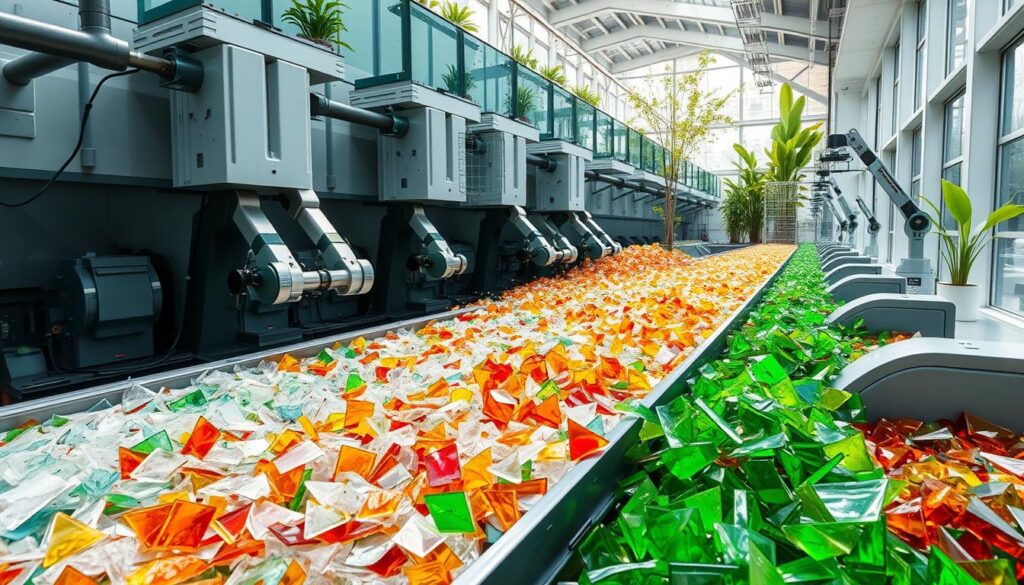
The glass recycling industry is seeing a big change with new technology. This change is making recycling better for the environment. It’s making glass recycling more efficient and eco-friendly6.
Advanced Sorting and Processing Techniques
Today’s glass recycling uses smart tech to work better. New sorting systems have cut down on waste, making glass almost pure6. This tech helps sort glass from other waste more accurately6.
- Optical sorting systems
- Artificial intelligence-driven processing
- High-precision material detection technologies
Emerging Uses for Recycled Glass
Recycled glass is being used in new ways. Companies are finding creative uses for it1:
- Construction materials
- Water filtration systems
- Decorative products
- Cement production alternatives
Industry Trends and Future Outlook
The glass recycling market is growing fast. It’s expected to hit nearly $7 billion by 2027, growing 5.2% each year6. These new techs make recycling better and save energy and the environment6.
“Technological innovations are transforming glass recycling from a waste management challenge into a sustainable resource recovery opportunity.”
These techs are making a big difference. They’ve cut lifecycle emissions by 30% and saved raw materials6.
The Role of Legislation in Glass Recycling
Legislation is key in making glass recycling important in the U.S. Governments at all levels are making policies to help recycling and protect the environment7.
State laws on recycling are strong tools for glass recycling. Each state has its own way to encourage recycling and cut down on waste.
State-Specific Recycling Regulations
Many states have created new laws to support glass recycling. These laws often include:
- Mandatory recycling rules
- Money for recycling programs
- Fines for throwing away waste wrong
Extended Producer Responsibility
Extended Producer Responsibility (EPR) is a big change in glass recycling laws. It makes manufacturers responsible for recycling. They must make products that can be recycled and fund recycling programs7.
| Legislative Approach | Impact on Glass Recycling |
|---|---|
| State Mandates | More people recycle |
| EPR Policies | Manufacturers take more responsibility |
| Financial Incentives | Better recycling facilities |
Local Government Success Stories
Local governments have done well with glass recycling programs. They have made laws that help a lot with recycling and less waste7.
“Legislation is the backbone of sustainable glass recycling efforts” – Environmental Policy Expert
Recycling laws keep getting better. They help make glass recycling better and more green across the country7.
Consumer Responsibility in Glass Recycling
Reducing waste starts with what we do at home. Every person can help protect our planet by recycling right. Knowing how to recycle glass bottles is key to better community waste management.
Simple steps can make a big difference in recycling2. About 73% of people look for recyclable packaging when shopping2. This shows more people care about the environment.
How Individuals Can Help
- Clean glass containers before recycling
- Remove labels and metal lids
- Separate glass by color when possible
- Use designated glass recycling bins
Best Practices for Glass Recycling
Good recycling means paying attention to details. Proper preparation lets recycled glass become new products.
| Action | Impact |
|---|---|
| Rinse glass containers | Prevents contamination |
| Check local recycling guidelines | Ensures correct disposal |
| Avoid breaking glass before recycling | Maintains recycling potential |
Myths and Misconceptions
“Every glass bottle recycled is a step towards a more sustainable future.”
8 Soon, companies will have to take care of their products from start to finish, including waste8. This will clear up common recycling myths.
By following these tips, we can all help reduce waste and protect our planet.
The Future of Glass Recycling in the United States
The world of glass recycling is changing fast, bringing new chances for green waste management. As more people care about the environment, the U.S. is seeing big changes in how glass is recycled.
Now, glass recycling is changing how we handle waste. New trends are coming that will change recycling glass benefits:
Emerging Trends in Glass Recycling
- Advanced sorting technologies improving material recovery
- Increased investment in recycling infrastructure
- Growing consumer awareness about sustainable practices
Potential for Increased Recycling Rates
There’s a good chance we’ll see more glass recycling. New tech is making recycling better and cheaper7. The Biden administration’s plans to invest in recycling will help a lot7.
| Recycling Aspect | Current Status | Future Projection |
|---|---|---|
| Glass Recycling Rate | 34% | 50-60% |
| Processing Technology | Traditional Methods | Advanced Sorting Systems |
| Infrastructure Investment | Limited | Significant Expansion |
Collaborations Driving Change
Working together is key to better glass recycling. Collaborative approaches are finding new ways to solve problems and make recycling better.
“The future of glass recycling depends on our collective commitment to sustainable practices.” – Recycling Industry Expert
Companies, cities, and tech firms are teaming up to improve recycling. These partnerships are vital for better glass recycling impact and benefits7.
Case Studies of Successful Glass Recycling Programs
Glass recycling is key for a greener future in the United States. Communities and companies are finding new ways to recycle more glass. This helps reduce waste and protect our environment.
Many case studies show how glass recycling can work well. Let’s look at some examples that show how to recycle glass the right way.
San Francisco: A Municipal Recycling Champion
San Francisco leads the way in glass recycling. The city has a top-notch recycling program. It has:
- A citywide glass collection system
- Partnerships with recycling facilities
- Community education efforts
Corporate Recycling Innovations
Companies are also making big strides in glass recycling. Owens-Illinois is a leader in recycling glass. They turn waste into something useful.
| Company | Recycling Strategy | Annual Impact |
|---|---|---|
| Owens-Illinois | Advanced Glass Recycling | 3.5 million tons recycled |
| Ripple Glass | Urban Collection Program | 25,000 tons processed annually |
Key Lessons from Successful Programs
What makes glass recycling successful? Programs that work share a few key traits:
- Strong community support
- Good recycling infrastructure
- Clear education for everyone
- Staying up-to-date with new tech
“Successful glass recycling is not just about collecting materials, but creating a comprehensive ecosystem of sustainability.” – Environmental Recycling Expert
These examples show that with effort and smart planning, we can recycle more glass9. The future of glass recycling looks bright as more groups try new things.
Conclusion: The Path Forward for Glass Recycling
Glass recycling is key for a greener future in the United States. It’s not just good for the planet; it’s essential for managing waste and saving resources9.
Everyone can help make a difference. By sorting right, supporting local recycling, and teaching others, we can change how we handle glass9. Every glass we recycle helps cut down on pollution and protects our environment.
Summary of Key Points
Glass recycling offers many benefits. It reduces harm to the environment, saves energy, and creates jobs9. It’s a powerful way to make our world more sustainable.
Call to Action for Individuals and Communities
We all need to work together for glass recycling’s future. Get involved with local recycling, support new technologies, and push for green policies. Every effort we make helps make our world cleaner and greener9.
Vision for a Sustainable Future
Picture a world where glass waste is a valuable resource. By using recycling tech and raising awareness, we can change how we manage waste. This will create a better future for all of us.
FAQ
What exactly is glass recycling?
Glass recycling turns old glass into new glass. It starts with collecting and sorting used glass. Then, it’s cleaned and melted into cullet, or crushed glass.This process makes new glass products. It saves energy and raw materials.
Why is glass recycling important for the environment?
It cuts down on landfill waste and saves natural resources. Recycling one ton of glass saves a lot of energy and materials.It also reduces the need to extract sand, soda ash, and limestone from the earth.
Can all types of glass be recycled?
Not all glass can be recycled. You can recycle clear, green, and brown glass from bottles and jars. But, window glass, mirrors, and ceramic dishes can’t be recycled.They have different melting points and chemical compositions.
How much energy does glass recycling save?
Recycling glass saves about 30% of energy needed to make new glass. Recycling one ton of glass can power a computer for 30-45 minutes.Or a TV for 3-4 hours. It’s a big energy saver.
What happens to glass after it’s collected for recycling?
Collected glass is sorted by color and cleaned. Then, it’s crushed into cullet. After that, it’s melted and formed into new glass products.This creates a cycle of recycling.
How can individuals improve their glass recycling efforts?
Clean your glass containers before recycling. Sort glass by color. Avoid mixing non-recyclable items.Check local recycling guidelines. Supporting recycling programs helps too.
Are there economic benefits to glass recycling?
Yes, recycling glass creates jobs. It also lowers costs for glass producers. Recycling can even make money through the sale of recycled glass.It supports local economies and is more cost-effective than making new glass.
What challenges exist in glass recycling?
Challenges include contamination and lack of recycling infrastructure. Transportation costs and public awareness are also issues.Contaminated glass is hard to process. Not all areas have good recycling facilities.
How does glass recycling help reduce carbon emissions?
Recycling glass lowers energy use and raw material extraction. This reduces carbon dioxide emissions by about 315 kilograms per ton.It’s a big environmental win.
What is the future of glass recycling in the United States?
The future looks good with new technologies and growing awareness. Artificial intelligence and new uses for recycled glass will boost recycling rates.These advancements will make recycling more efficient in the years to come.
Related posts:
How to Encourage Glass Recycling in Your Community: A Comprehensive Guide
Introduction
Glass is a highly recyclable material, capable of being endlessly transformed without l...
What Happens to Glass After You Recycle It: From Bin to Bottle
Introduction
Recycling is a cornerstone of sustainable living, and glass is one of the most recyclab...
A Clear Vision: The History of Glass Recycling Around the World
Introduction
Glass, a material as old as civilization itself, has a rich history of being reused and...