Recycling in Austin: Your Guide to Going Green

Discover the Latest Glass Recycling Statistics
Learn about current glass recycling statistics in the US, including recycling rates, environmental impact, and industry trends. Discover how recycling glass benefits our planet.

It’s important to know about glass recycling stats to see how we’re doing on the environment. Glass recycling helps us use resources better and cut down on waste1.
Experts and leaders are really into glass recycling rates. These stats show how well we’re doing in reducing waste and saving resources. They help us see what’s working and what’s not in recycling2.
Looking at these numbers is more than just data. It shows our dedication to being green and taking care of the planet. Every little bit of recycling adds up to big changes3.
Key Takeaways
- Glass recycling statistics provide critical insights into waste management
- Tracking recycling rates helps identify environmental progress
- Community involvement is crucial for improving recycling efforts
- Data-driven approaches can enhance recycling strategies
- Understanding recycling trends supports environmental conservation
Overview of Glass Recycling in the United States
Glass recycling is key to managing waste and saving our environment. It’s more than just reducing waste. It’s about keeping our planet and economy healthy.
Importance of Recycling Glass
Recycling glass helps us save energy and resources. Every ton of recycled glass saves about one ton of raw materials needed to make new glass.
- Reduces landfill waste
- Conserves natural resources
- Decreases energy consumption
- Minimizes carbon emissions
Environmental Benefits
Recycling glass has big environmental benefits. It uses less energy than making new glass. Plus, glass can be recycled forever without losing quality.
“Recycling glass is one of the most effective ways to reduce our environmental footprint.” – Environmental Protection Agency
Economic Impact
Recycling glass also boosts the economy. It creates jobs and helps local businesses. Using recycled glass saves money because it needs less energy and raw materials.
| Economic Benefit | Impact |
|---|---|
| Job Creation | Supports local recycling industries |
| Cost Reduction | Lower manufacturing expenses |
| Resource Efficiency | Reduces dependency on raw materials |
Learning about glass recycling helps us build a better future. Every recycled glass bottle helps our planet and economy grow4.
Glass Recycling Rates Over the Years
Looking at how glass recycling rates have changed helps us see how we’re doing on environmental issues in the U.S. Over time, recycling glass has changed a lot. This is because people’s views and new tech have evolved.
Historical Data Analysis
The story of glass recycling rates is complex. At first, recycling glass was rare, and most went to landfills. Glass recycling facts show how better ways to collect and process glass have come along over the years.
- 1970s: Limited glass recycling infrastructure
- 1980s: Initial widespread recycling program implementations
- 1990s: Increased public awareness about recycling importance
Recent Trends
Recently, glass recycling rates have seen some good changes. The national rate for recycling glass has gone up and down, due to many factors. Some important points include:
- Improved collection methods
- Advanced sorting technologies
- Growing consumer consciousness
“Every glass bottle recycled is a step towards a sustainable future.”
Future Projections
Experts think glass recycling rates will keep going up. This is thanks to new tech and stricter rules on the environment. The goal is to make recycling better and cut down on waste.
| Year | Projected Recycling Rate |
|---|---|
| 2024 | 35% |
| 2025 | 40% |
| 2026 | 45% |
To keep moving forward, we need to keep investing in recycling and teach more people about it. This will help improve glass recycling rates all over the U.S5.
How Glass is Recycled
Glass recycling is key to sustainable waste management in the U.S. Knowing how it works helps communities better manage glass waste. It also supports the growth of the recycled glass market.
Collection Methods
Glass recycling starts with how we collect it. Cities use different ways to gather recyclable glass:
- Curbside pickup programs
- Drop-off recycling centers
- Community recycling bins
- Specialized glass collection events
Transportation and Sorting
After we collect it, glass is transported and sorted. Special trucks carry glass containers to recycling facilities. There, it’s sorted by:
- Color
- Removing non-glass contaminants
- Quality
Processing Techniques
Turning glass into new materials involves several steps:
| Processing Stage | Description |
|---|---|
| Cleaning | Removing labels, dirt, and residues |
| Crushing | Breaking glass into small, uniform fragments |
| Melting | Heating glass to create new products |
“Recycling glass reduces energy consumption and minimizes waste in landfills.” – Environmental Protection Agency
Today’s recycling facilities use new technologies to process glass efficiently. The growth of the recycled glass market relies on new ways to turn waste into valuable resources6.
Glass Packaging and Recycling
Glass packaging is key in recycling efforts in the United States. Knowing about glass containers, their recyclability, and packaging rules helps us make better choices for the environment7.
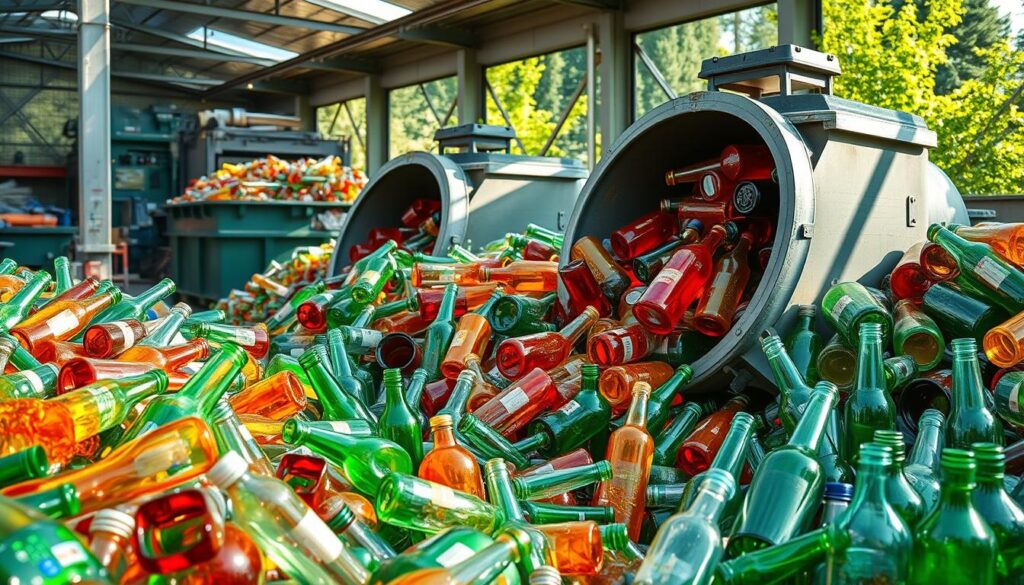
Common Types of Glass Containers
Glass containers vary in shape and size. The most common types are:
- Wine bottles
- Beverage containers
- Food jars
- Pharmaceutical packaging
Recyclability of Different Glass Colors
Color affects how recyclable glass is and its value. Clear glass is the most valuable. But colored glass needs special processing2.
| Glass Color | Recyclability | Market Value |
|---|---|---|
| Clear | High | Premium |
| Green | Medium | Moderate |
| Brown | Low | Lower |
Influence of Packaging Regulations
Packaging rules play a big role in glass recycling. More and more people want sustainable packaging. In fact, 73% say recyclable packaging is key when they buy something7.
Sustainable packaging is no longer optional—it’s a consumer expectation.
Recycling glass has a big environmental benefit. It cuts down on waste and saves natural resources7.
Regional Variations in Glass Recycling
Glass recycling rates vary a lot across the United States. This shows the complex world of recycling. Knowing these differences helps us understand the challenges and chances in recycling8.
States Leading in Glass Recycling
Some states are leading in glass recycling. They show a strong commitment to being green. California, Oregon, and Washington are among the best at recycling glass9.
- California: 80% glass recycling rate
- Oregon: 75% glass container recycling
- Washington: 72% recycling efficiency
States Struggling with Glass Recycling
On the other hand, some states are struggling. Alabama, Mississippi, and Louisiana have recycling rates often under 30%9.
Key Factors Influencing Regional Differences
Many things affect how much glass is recycled in different places:
- Local infrastructure availability
- Community awareness programs
- State-level recycling policies
- Economic incentives
| Region | Recycling Rate | Key Challenges |
|---|---|---|
| West Coast | 75-80% | Advanced infrastructure |
| Southern States | 20-35% | Limited recycling facilities |
| Midwest | 40-55% | Emerging recycling programs |
“Recycling is not just about waste management, it’s about creating sustainable communities.” – Environmental Sustainability Expert
These differences show why we need specific plans to boost recycling. We should use each area’s strengths and tackle its challenges8.
Challenges in Glass Recycling
Glass recycling faces big hurdles that affect waste management in the U.S. It’s key to understand these issues to better manage glass waste and boost recycling efforts1.
Contamination Issues in Glass Recycling
Contamination is a big problem in glass recycling. Mixing different colors and adding non-glass items makes recycling hard. These issues can ruin the whole batch, making it less efficient and more expensive1.
- Color mixing reduces recyclability
- Non-glass materials disrupt processing
- Increased sorting costs
Market Demand Fluctuations
The glass recycling market is very unstable. Changes in demand for recycled glass make it hard for recycling centers and makers1.
| Market Challenge | Impact |
|---|---|
| Inconsistent Demand | Reduced recycling incentives |
| Price Volatility | Decreased economic viability |
Infrastructure Limitations
Not enough recycling facilities is a big problem. Many places don’t have the right places to process glass, making recycling tough1.
“The future of glass recycling depends on overcoming infrastructure challenges.” – Recycling Industry Expert
To solve these problems, we need to work together. Governments, recycling centers, and makers must find new ways to recycle glass better1.
Innovations in Glass Recycling
The glass recycling industry is going through a big change. New technologies and teamwork are leading the way. These changes are making glass recycling better for our planet.
Emerging Technologies Driving Change
New technologies are changing the game in glass recycling. Automated systems are making recycling faster and more accurate10. Some of these innovations include:
- Smart bin technologies increasing collection rates by up to 40%10
- Advanced optical sorting machines
- AI-powered recycling platforms
Automation’s Critical Role
Automation is making a big difference in glass recycling. Robots can now sort glass containers with great accuracy10. This reduces waste and makes recycling better for the environment.
Strategic Partnerships Accelerating Progress
Working together is crucial for glass recycling progress. Partnerships between research groups, tech companies, and local governments are creating new solutions. Every partnership brings us closer to a greener recycling system.
“Innovation in glass recycling is not just about technology, but about reimagining waste as a valuable resource.” – Recycling Industry Expert
By adopting these new methods, the glass recycling industry is ready to make big strides in sustainability10.
Impact of Legislation on Glass Recycling
Legislation is key in shaping glass recycling in the U.S. Government efforts are vital for sustainable waste management and better recycling stats.
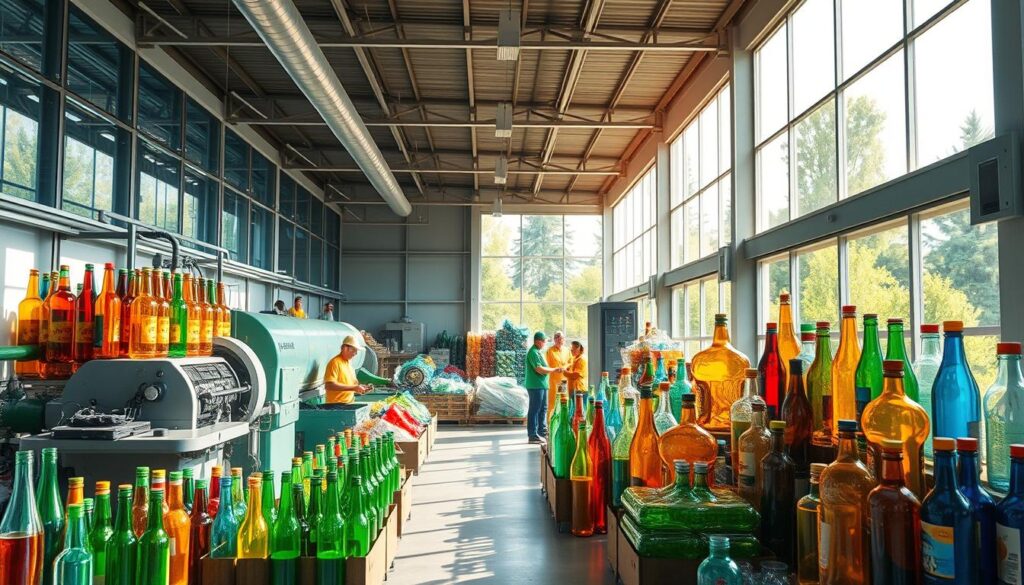
Key Government Initiatives
Federal and state governments have set up detailed plans to boost glass recycling. They focus on several main areas:
- Setting recycling goals
- Offering financial help
- Running public awareness campaigns
- Supporting infrastructure growth
Effects of Bottle Bills
Bottle deposit laws are a big help for recycling glass. They give people a clear reason to return glass containers. Ten states have bottle bills, showing big gains in recycling and less waste.
| State | Bottle Deposit | Recycling Impact |
|---|---|---|
| Michigan | $0.10 | 90% return rate |
| Oregon | $0.05 | 85% return rate |
| California | $0.05-$0.10 | 80% return rate |
Local vs. Federal Policies
Local and federal glass recycling laws differ a lot. Federal rules offer a broad outline, but local areas often come up with unique, effective plans.
“Effective glass recycling requires collaborative approaches between different levels of government” – Environmental Policy Institute
The changing landscape of laws is pushing for better recycling across the country1.
The Future of Glass Recycling
The world of glass recycling is changing fast, with new trends towards sustainability. Cities and green groups are working on better ways to recycle and cut down on trash1. Recycling glass is now key in managing waste in cities across the U.S.
Sustainability Goals in Motion
Communities are setting big goals for glass recycling, seeing its environmental benefits. New methods for collecting and processing glass are being tried out. New tech is turning glass waste into useful materials, helping the planet11.
This push for better recycling shows a strong commitment to less landfill waste and saving natural resources.
Community Engagement Strategies
Getting people involved is vital for glass recycling progress. Local efforts are using creative ways to get residents involved, like community events and workshops. Awareness campaigns are spreading the word on recycling’s benefits1.
Schools, community centers, and local governments are working together to make recycling better.
Education and Awareness
Teaching people is essential to boost glass recycling. Programs are focusing on how to sort glass right, understanding recycling symbols, and the impact of our actions. As recycling trends grow, education will be key in changing waste management for a greener future11.
FAQ
What percentage of glass is currently recycled in the United States?
About 33% of glass containers are recycled in the U.S. This is lower than many other countries. We need better recycling systems and to teach more people about recycling glass.
Why is glass recycling important for the environment?
Recycling glass helps reduce landfill waste and saves natural resources. It also saves energy. Recycling one ton of glass can save a lot of materials and reduce carbon emissions.
How many times can glass be recycled?
Glass can be recycled endlessly without losing quality. It can be melted and reformed many times. This makes glass a very sustainable packaging material.
What are the biggest challenges in glass recycling?
Challenges include contamination and uneven recycling systems across the country. High transportation costs and limited demand for recycled glass are also big issues.
Which states have the highest glass recycling rates?
California, Oregon, and Massachusetts lead in recycling glass. They have good recycling programs and strong environmental policies. This helps them recycle more glass.
How does glass color affect recyclability?
All glass colors can be recycled, but clear glass is most valuable. Green and brown glass have fewer markets, which affects their recycling.
What happens to recycled glass?
Recycled glass is crushed, cleaned, and turned into cullet. It’s used to make new glass containers, fiberglass insulation, and decorative materials. It’s also used in road construction.
How can individuals improve glass recycling in their community?
You can help by cleaning and sorting glass properly. Use local recycling centers and support bottle deposit programs. Advocate for better recycling systems and teach others about recycling.
What economic benefits does glass recycling provide?
Glass recycling creates jobs and saves money on waste management. It also saves energy and supports a circular economy. This turns waste into valuable resources.
Are there any emerging technologies improving glass recycling?
Yes, new technologies include advanced sorting and AI systems. There are also better crushing and cleaning methods. These could help recycle more glass efficiently.
Related posts:
How to Encourage Glass Recycling in Your Community: A Comprehensive Guide
Introduction
Glass is a highly recyclable material, capable of being endlessly transformed without l...
What Happens to Glass After You Recycle It: From Bin to Bottle
Introduction
Recycling is a cornerstone of sustainable living, and glass is one of the most recyclab...
A Clear Vision: The History of Glass Recycling Around the World
Introduction
Glass, a material as old as civilization itself, has a rich history of being reused and...